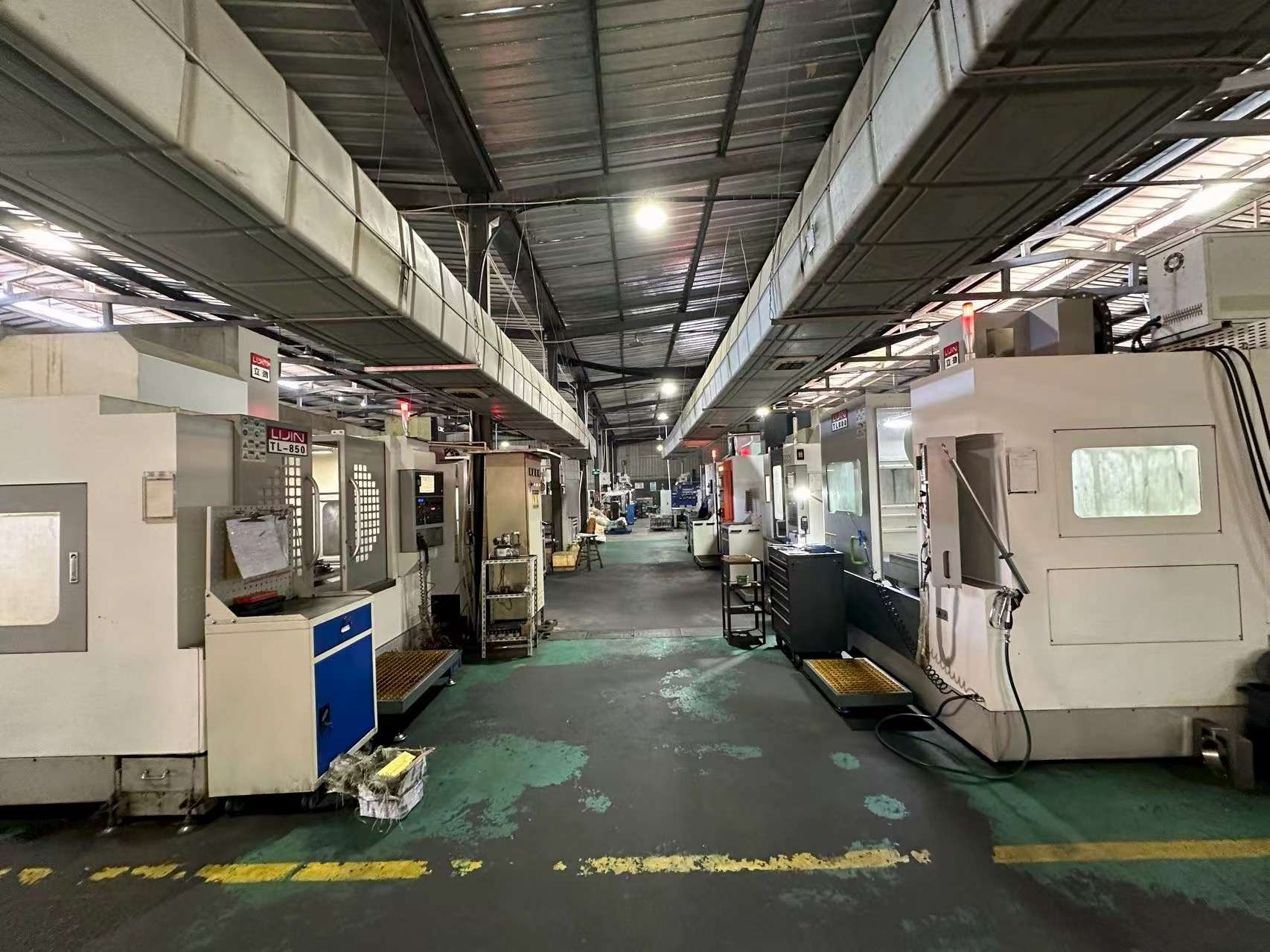
Precision hardware manufacturers are increasingly adopting 4-axis machining centers to process multi-face complex components, reduce secondary setups and maintain stable dimensional accuracy during batch production.
Compared with traditional 3-axis CNC machining centers, a 4-axis machining center adds a rotary A-axis, allowing workpieces to rotate continuously or at indexed angles. This enables milling, drilling, tapping and contour machining on multiple surfaces under one clamping operation.
Improved Efficiency for Complex Hardware Components
For precision hardware parts made from aluminum, stainless steel and alloy materials, 4-axis machining technology helps manufacturers reduce repeated positioning processes and improve overall production efficiency. By minimizing workpiece re-fixturing, manufacturers can reduce accumulated positioning errors, shorten machining cycles and improve product consistency.
Balancing Capability and Investment Cost
For custom hardware, automotive fittings, electronic housings and mechanical components, 4-axis machining centers provide a practical balance between machining capability and equipment investment. They deliver many multi-sided machining advantages of 5-axis systems while maintaining a more accessible cost structure for many precision machining workshops.
Wider Applications in Precision Manufacturing
Many subcontract machining suppliers are using 4-axis equipment to handle higher-value projects that require angled holes, complex profiles and improved surface accuracy. The technology is becoming an important solution for manufacturers seeking greater flexibility in small-batch and mass production.
Reducing Operations and Improving Production Stability
With advanced 4-axis machining, components that previously required three or four separate operations on conventional 3-axis machines can often be completed in a single setup. Reduced manual handling improves production stability, while consistent machining processes help maintain quality across large hardware production runs.
- Multi-face machining with fewer setups
- Improved dimensional accuracy and repeatability
- Shorter production cycles for complex components
- Reduced material waste and machining errors
Future Demand for 4-Axis Machining Technology
As global customers continue to increase requirements for component precision, production efficiency and shorter delivery cycles, demand for 4-axis machining centers is expected to remain strong. The technology provides precision hardware manufacturers with a flexible solution for producing complex parts while improving overall manufacturing performance.